Living Reiki: Listening to the Subtle Currents of Life

Reflections on completing my Reiki Master training—and on what science can measure, contemplative traditions can illuminate, and humility asks us to practice.
Completing my Reiki Master training did not feel like reaching the summit of a mountain. It felt more like arriving at the threshold of a deeper practice.
The word master can easily suggest arrival, authority, or possession of special knowledge. Yet my experience has been almost the opposite. This training has reminded me how much remains mysterious, how carefully healing work must be approached, and how little of life can—or should—be controlled.
For me, becoming a Reiki Master is not about mastering energy. It is about accepting a greater responsibility to listen, practice, serve, and remain teachable.
Perhaps that is why my reflections keep returning to the night sky.
The Light of the Past
When we look toward the stars, we are not seeing them exactly as they are now. We are receiving light that has crossed immense distances before reaching our eyes. Some of that light began its journey years ago. Other light has traveled for thousands or even millions of years.
We look upward and receive echoes of the past.
As an engineer, I find this extraordinary. Light is not merely something that allows us to see. It carries information. By studying its wavelengths and patterns, scientists can learn about the composition, temperature, and motion of celestial bodies that no human being could physically reach.
The universe reveals itself through traces.
Not everything is immediately visible, yet the invisible may still leave an imprint that can be observed, studied, or experienced.
This does not mean that every unseen phenomenon is the same, or that the language of physics can be used to prove every spiritual teaching. Scientific energy, electromagnetic radiation, and the subtle energy described in healing traditions belong to different systems of understanding. Precision matters—especially when we speak across the boundaries of science and spirituality.
Still, both the scientist and the contemplative practitioner begin with a form of attention. Both learn to notice patterns that might otherwise be missed.
Different Languages for the Experience of Life
Human cultures have developed many ways of describing the animating quality of life.
Yoga speaks of prāṇa, the vital movement associated with breath, life, and awareness. Ayurveda considers how prāṇa and other organizing principles participate in the functioning and balance of the living being. Traditional Chinese Medicine speaks of qi and the pathways through which it moves. Reiki arises from a Japanese context in which ki is central to its name and practice.
These terms are related in the broad sense that they describe life as more than a collection of inert physical parts. But they are not simply different words for one identical substance. Each belongs to its own history, language, philosophy, and system of practice.
Respecting these traditions requires more than blending their vocabulary together. It asks us to listen for both their resonances and their differences.
Yogic teachings also offer maps such as the five kośas, described in the Taittirīya Upaniṣad. These layers invite us to contemplate human experience through the physical body, vitality, mind, discernment, and deep interiority. Other yogic and tantric traditions describe chakras and subtle channels as part of a sophisticated contemplative anatomy.
These teachings were not originally presented as electromagnetic diagrams or structures with scientifically established frequencies. Their value does not depend upon forcing them into the categories of modern physics. They offer another kind of map: one developed through embodied practice, philosophical inquiry, meditation, and generations of transmission.
As both an engineer and a practitioner, I do not feel compelled to make one system prove the other. Science and contemplative traditions ask different questions and use different methods. Each can be approached with rigor. Each can also be distorted when its claims are exaggerated.
Science helps us investigate what can be consistently observed and measured. Spiritual and contemplative practice asks how we live, perceive, relate, suffer, heal, and make meaning.
There is room for wonder without abandoning discernment.
Reiki as a Practice of Listening
Reiki, as I have come to understand it, is not a practice of imposing change upon another person. It is not an attempt to command the intelligence of the body or force an outcome.
It is a practice of presence.
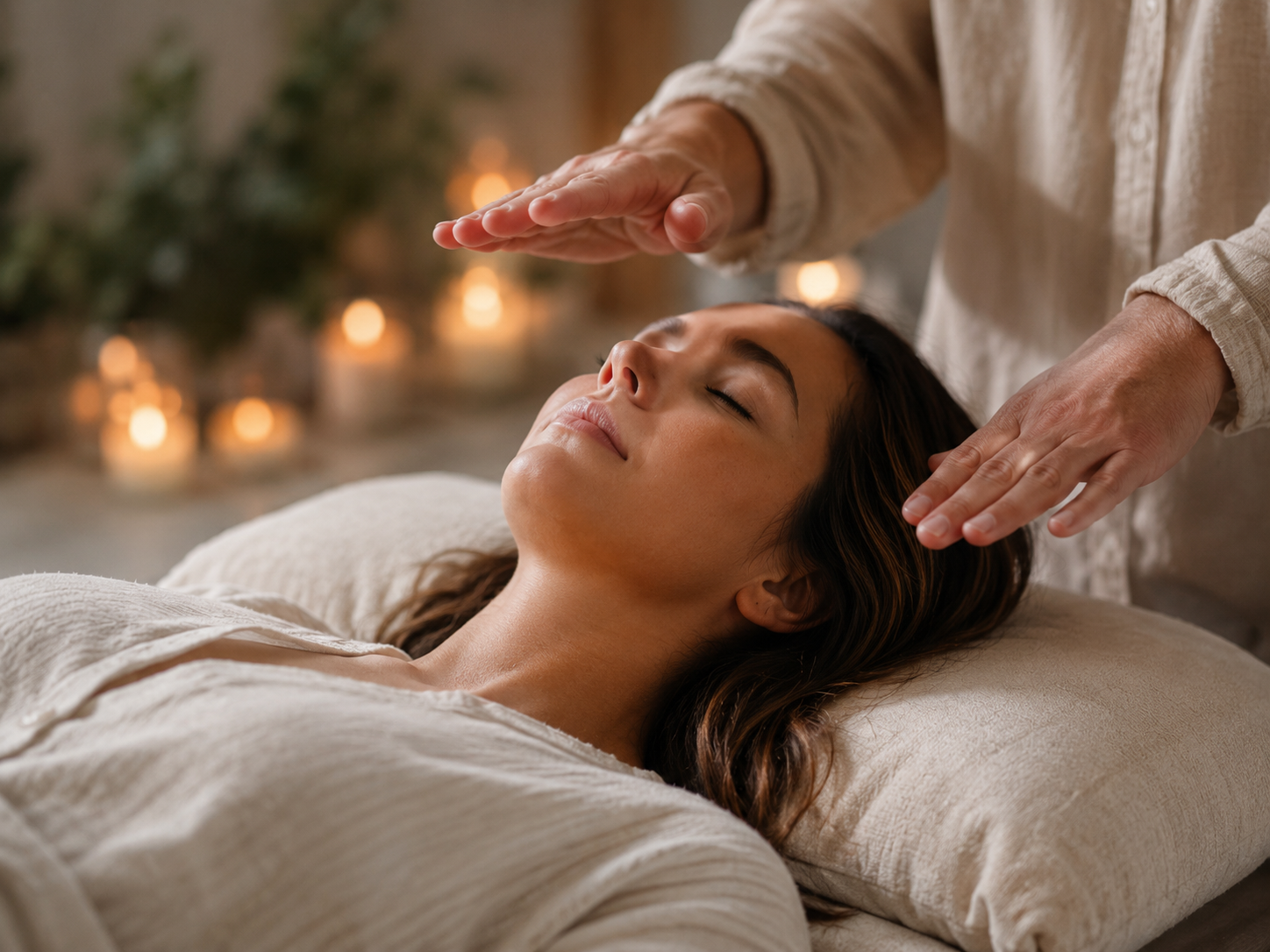
During a Reiki session, the practitioner listens—not only with the ears, but with the hands, the breath, the body, intuition, and awareness. We create conditions in which another person may rest and receive. We offer attention without demanding that the experience take a particular form.
Sometimes the recipient notices warmth, tingling, spaciousness, emotion, or deep relaxation. Sometimes very little is consciously perceived. The practice does not require dramatic sensation to be meaningful.
This kind of listening is subtle, but it is not passive. It asks for steadiness, ethical responsibility, humility, and the willingness to remain present without rushing to fix what we do not fully understand.
Healing is often spoken of as though it means returning the body to a previous condition. Yet healing may also mean learning to live more compassionately within the conditions that are present. It may involve medical treatment, psychological support, rest, nourishment, movement, boundaries, community, spiritual practice, or some combination of these.
Reiki does not replace appropriate medical or mental-health care. It can accompany care as a complementary practice—one that invites rest, awareness, and a different quality of relationship with ourselves.
The practitioner is not the source of another person's healing. We participate, support, witness, and make space.
That distinction matters.
What Engineering Has Taught Me About Healing
My work as an engineer has trained me to look at systems.
A structure cannot be understood by examining only one component. Water does not move independently of slope, material, gravity, and containment. An aircraft does not remain in flight because of a single isolated force. Stability emerges from relationships among many conditions acting together.
Living systems are even more complex.
A human being cannot be reduced to a symptom, a diagnosis, a thought, a chakra, a doṣa, or a moment of emotional difficulty. We are shaped by biology, history, environment, relationship, culture, memory, nourishment, movement, sleep, purpose, and countless other influences.
Ayurveda has deepened this understanding for me by emphasizing relationship, rhythm, and context. Yoga has taught me to observe the movements of body, breath, mind, and awareness. Reiki has taught me to become quieter in the presence of what cannot immediately be solved.
Engineering asks me to analyze carefully.
Yoga asks me to observe honestly.
Ayurveda asks me to consider the whole person and the conditions surrounding them.
Reiki asks me to listen before I act.
These are not contradictory ways of knowing. Together, they continually challenge me to become both more discerning and more humble.
Living Reiki Beyond the Treatment Table
Reiki cannot be confined to what happens during a formal session.
To live Reiki is to notice the quality of energy we bring into ordinary life—not energy as a vague scientific claim, but as attention, effort, presence, and relationship.
What am I carrying into a room?
What am I amplifying through my words?
Where is my attention being directed?
Am I responding from clarity, or reacting from exhaustion and fear?
Can I care for another person without trying to control their path?
Can I offer myself the same compassion I so readily extend to others?
These questions are part of the practice.
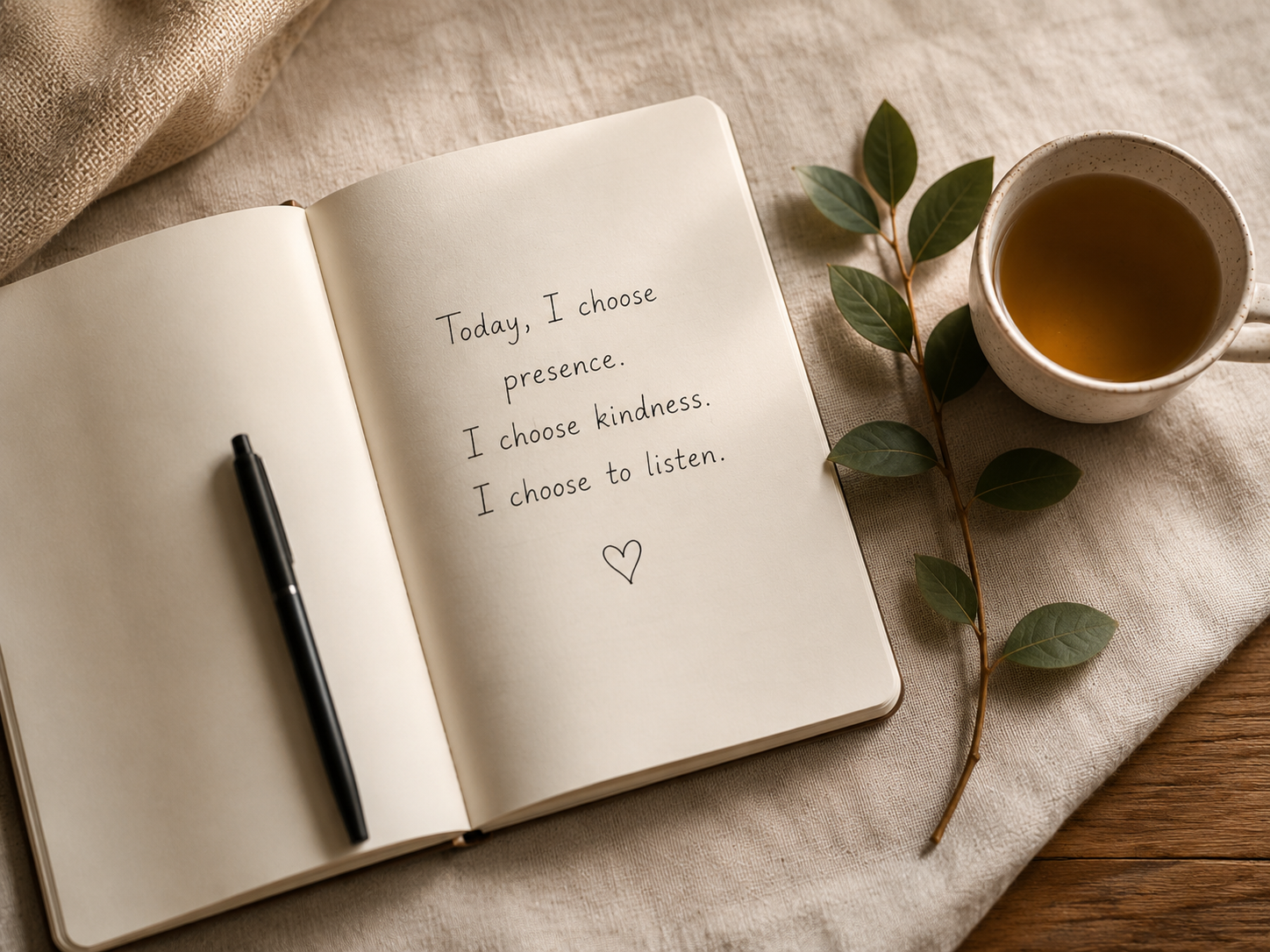
Living Reiki may appear in the pause before speaking. It may be expressed through rest when the body has been ignored for too long, through an honest boundary, through gratitude, or through the decision to remain with another person's pain without immediately covering it with advice.
It may mean caring for our own nervous systems so that we do not continually spill our unexamined agitation into the lives of others.
It may mean recognizing that peace is not simply a private state. The ways we tend to ourselves shape the homes, workplaces, classrooms, and communities we inhabit.
A Reiki session may last an hour. The practice of becoming more present continues throughout the day.

The Pale Blue Dot
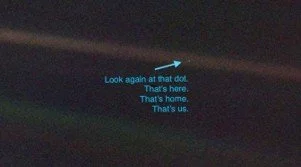
In 1990, the Voyager 1 spacecraft photographed Earth from billions of miles away. In that image, our planet appeared as a tiny point of light suspended in the vastness of space.
Reflecting upon it, astronomer Carl Sagan wrote:
“That’s here. That’s home. That’s us.”
The image does not prove anything about subtle energy or healing. Its teaching is perspective.
Every human life we have known has unfolded on this small world. Every boundary we defend, every identity we construct, every war we wage, every act of love we offer, and every future we imagine belongs to this fragile planetary home.
From a sufficient distance, many of our claims to superiority become difficult to sustain.
The pale blue dot reminds us that humility is not self-erasure. It is the recognition that we belong to something far larger than the individual self. Our lives are brief, yet they matter. Our actions are small within the scale of the cosmos, yet they shape the lives immediately around us.
This is where the image returns me to Reiki.
Reiki does not ask us to become grander. It asks us to become more attentive.
It invites us to care for the life directly before us: this body, this breath, this person, this moment, this Earth.
A Beginning Rather Than an Arrival
As I complete this stage of Reiki training, I am left with fewer declarations and deeper questions.
How can I serve without centering myself?
How can I honor intuition while remaining discerning?
How can I speak of mystery without making claims I cannot support?
How can I preserve the simplicity of the practice while continuing to study its history, ethics, and lineage?
How can I allow Reiki to shape not only what I do with my hands, but how I live?
The title of Reiki Master does not resolve these questions. It makes me more responsible for continuing to ask them.
Perhaps mastery, in this context, is not a state we achieve. Perhaps it is a commitment to keep returning—to the practice, to humility, to ethical reflection, and to the quiet awareness that life is always more complex than our explanations of it.
When I look at the night sky, I remember that the light reaching me has traveled across distances I can scarcely comprehend.
When I offer Reiki, I remember that another human being also carries a history I cannot fully know.
Both encounters ask something similar of me:
To pause.
To listen.

To meet mystery with reverence rather than possession.
To tend the small but meaningful light entrusted to each of us.
Within this vast and expanding universe, our individual lives may appear no larger than a pale blue dot. Yet every act of attention, compassion, and care becomes part of the world we create together.
For me, that is what it means to live Reiki.